How to Find Your Vocal Range and Stop Cracking on Every Chorus
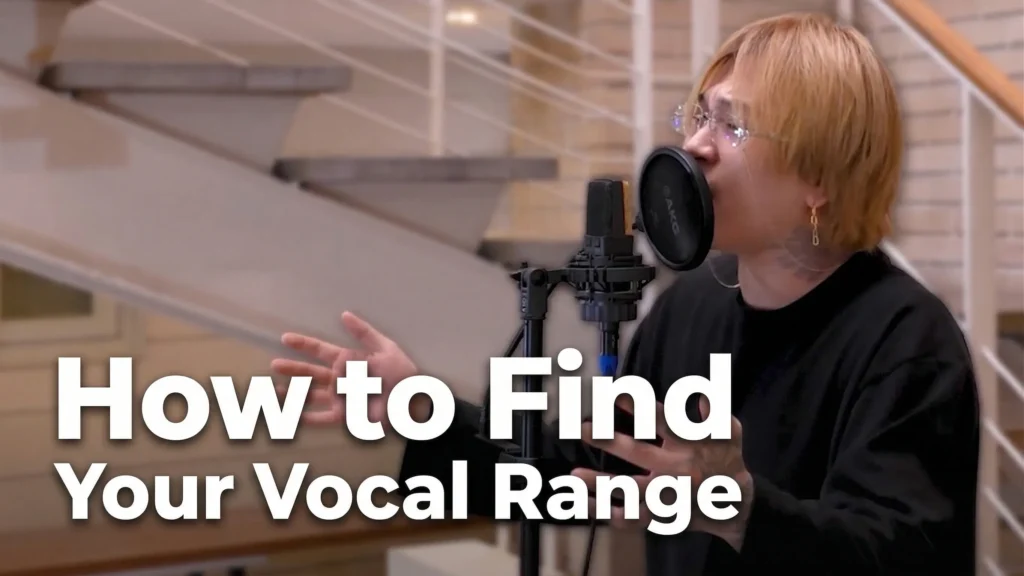
You want to sing that Vocaloid song. You’ve listened to it a hundred times. You know every word, every breath, every beat drop. But the second you open your mouth at the chorus, your throat clamps shut, your voice cracks, and the note you need just doesn’t come out.
So you try harder. You push more air. You tighten everything. And it gets worse.
Here’s what nobody tells you: that cracking sound isn’t a sign that you’re a bad singer. It’s your vocal cords sending an SOS — they’re being forced into a state they haven’t been trained to handle. And the reason they can’t handle it has nothing to do with talent. It has everything to do with one thing you’ve never checked.
Your vocal range.
Once you know it, you stop guessing. You stop hurting yourself. And you start making real progress toward the songs you actually want to sing.
Find your vocal range now with our free tool →
What Is a Vocal Range?
Your vocal range is the lowest note you can hold cleanly to the highest note you can hold cleanly. Everything in between is yours.
Not the note you squeezed out once by crushing your throat. Not the breathy low rumble that disappeared after half a second. Your range is what you can produce clearly, repeatedly, without anything breaking or tightening.
Think of it as a snapshot — where your voice works right now, today. Not where it will always be. That snapshot changes as your technique improves, which is exactly why measuring it matters.
Here’s the part most people miss. If you’ve been trying to sing songs that sit way above your current range without knowing it, you haven’t just been failing at those songs. You’ve been training your throat to tighten every time you go for a high note. You’ve been building the exact habits that make high notes harder, not easier. And every time you push through the strain instead of stepping back to understand what’s happening, those habits dig in deeper.
That’s why the first step isn’t a vocal exercise. It’s a measurement.
Vocaloid Songs Aren’t Built for Human Voices
The voice singing your favorite Vocaloid song has no vocal cords. It has no throat that tightens. It never runs out of breath. It doesn’t feel pain.
Vocaloid producers compose for a voice synthesizer with zero physical limitations. They put notes wherever the melody sounds best — not where a human can comfortably reach. The result is songs where C5, D5, and E5 aren’t occasional peaks. They’re the baseline.
To put that in perspective: the average untrained male voice tops out around A4. The average female voice around C5 to D5, and that’s already pushing it. Now look at what Vocaloid songs casually demand:
| Song | Artist / Vocaloid | Highest Note |
|---|---|---|
| Charles (シャルル) | balloon / flower | C#5 |
| Rabbit Hole (ラビットホール) | DECO*27 / Hatsune Miku | F#5 |
| Darling Dance (ダーリンダンス) | — / Hatsune Miku | C5 |
| Kouon Chuu On’iki Test (高音厨音域テスト) | KimurawaiP / Hatsune Miku | E5+ |
The gap between where most voices sit and where these songs live is typically 4 to 7 semitones. That’s not a small stretch. That’s an entire world of notes your voice has never been asked to produce.
And when you try to cross that gap by just pushing harder, a predictable chain kicks in. Your breath pressure maxes out. Your throat compensates by clamping down. The sound gets thin and strained. Then your vocal cords can’t sustain the pressure anymore and they snap into a completely different state — that’s the crack. The sudden, uncontrolled shift that sends your pitch flying.
Eight out of ten students who walk into our studio for the first time describe the exact same experience. They say: “I’ve been trying to sing this song for months, but my voice always breaks at the same spot.” When we measure their range, the pattern is almost always identical — their highest comfortable note sits about 4 to 5 semitones below the song’s peak. They’ve been slamming into the same wall, over and over, without knowing it was there.
Knowing your range doesn’t mean accepting a limit. It means finally seeing the wall so you can learn to climb over it instead of running into it.
How to Find Your Vocal Range
You don’t need a piano. You don’t need a music degree. You don’t even need to be able to carry a tune. Here’s how to get an honest measurement in a few minutes.
1. Start from your speaking voice.
Don’t try to hit your highest note first. Start by just talking. Say a sentence out loud in your normal voice. That pitch — the one you use without thinking — is your anchor point. It’s where your breath and vocal cords are already working together naturally. No strain, no effort, no thinking about it. This is important because your speaking voice already has the right balance of breath pressure and vocal cord contact for its pitch. That’s why talking feels effortless even after hours. Every note you sing will be measured relative to this starting point.
2. Go down.
From that speaking pitch, move lower one note at a time. Hum or sing “ah” — whatever feels natural. Keep going until the sound gets foggy, unstable, or airy. The last note where your voice was still clear and steady? That’s your lowest note. Write it down.
3. Go up.
Come back to your speaking pitch. Now go higher, one note at a time. Same approach — stay relaxed, don’t push. The moment your throat starts tightening, your sound thins out, or your voice cracks, you’ve hit your current ceiling. The last note before that happened is your highest note. Write it down. Don’t try to squeeze out one more. The point isn’t to impress yourself. The point is to get an honest number you can actually use.
4. Record it.
Write your range in note names — for example, D3 to A4. If you don’t know the exact note names, that’s fine. That’s what our tool handles for you.
5. Test it right now.
Our free vocal range test takes less than a minute. It works from your phone or computer, listens through your microphone, and gives you your exact range in note names — no guessing required.
Once you have your number, keep reading. The next part changes everything.
Your Range Has No Ceiling
You just measured your range. Maybe it stopped at B4. Maybe A4. Maybe lower.
If your first thought was “so I’ll never sing Charles in the original key” — that thought is wrong.
What you just measured is where your voice works today, using the habits you currently have. It is not a verdict on what your voice can do. It’s a starting point.
Here’s a fact that surprises almost everyone we work with: 99% of people who can’t hit high notes aren’t limited by their vocal cords. They’re limited by never having learned to change the state of their vocal cords. That’s it. Not genetics. Not “talent.” A specific physical skill they were never taught.
Why Your Voice Stops Where It Stops
When you try to go higher, your instinct is to push — more air, more force, more volume. This works up to a point. Increasing breath pressure makes your vocal cords vibrate faster, which raises the pitch.
But this mechanism hits a wall. For most men, that wall is around G4 to A4. For most women, a bit higher. Past that point, pushing harder doesn’t produce higher notes. It produces tension. Your throat locks up. Your body is trying to brute-force a result that actually requires a completely different approach.
The Shift Most Singers Never Learn
There are exactly two ways to raise your pitch.
| Method | How it works | Limit |
|---|---|---|
| Increase breath pressure | Vocal cords stay short and thick; more air pushes them to vibrate faster | ~G4 for men, slightly higher for women. Beyond this, throat tension takes over |
| Change vocal cord state | Vocal cords stretch from short/thick to long/thin; higher notes are produced without extra force | No fixed ceiling — extends with training |
The first is what you already do: push more air. Your vocal cords stay in their natural state — short, thick, the same shape they use when you talk — and you increase pressure to vibrate them faster. This works, but only up to around G4 or so. After that, the pressure gets too high, and your throat fights back by clamping down.
The second way is the one that unlocks everything above that wall: you change the shape of your vocal cords themselves. They can go from short and thick — your normal speaking state — to long and thin. When they stretch thin, higher notes come out without you having to force them. The pitch goes up, but the effort doesn’t.
When someone cracks on a high note, what’s actually happening is this shape change occurring in an uncontrolled way. The cords can’t sustain the pressure in their thick state, so they suddenly snap thin. The pitch jumps. The sound quality changes. That’s the crack.
But when you train this transition to happen gradually, you get something entirely different: a voice that moves from low to high without breaking, without straining, and without the tone changing drastically.
What Actually Makes the Difference
The foundation is what we call a “resonant first sound.” It’s the combination of two things working together: enough engagement from your breathing muscles, and the right amount of vocal cord contact.
When these two are coordinated, your voice produces a clear, efficient sound that doesn’t waste breath and doesn’t require excess tension. This is the seed of every sound you’ll ever make — low notes, high notes, loud, soft, everything starts here.
Without it, your body compensates. It tightens your throat to make up for weak breath support. Or it pushes excess air through poorly closed vocal cords. Either way, the result is strain. And strain is what keeps your range locked in place.
With it, the path opens. You build control in your comfortable range first. Then you train the cord transition — learning to let your cords lengthen gradually as you go up, instead of fighting to keep them thick until they snap.
One student came in with a top note of G4. He’d been trying to sing Charles for months and cracking at the same spot every time. Within six weeks of learning this transition — not by pushing harder, but by training his vocal cords to stretch smoothly — he was consistently hitting B4 and touching C5 without strain. The song that used to defeat him became singable.
That’s not an unusual result. That’s the pattern. When you stop fighting your voice and start training the right mechanism, the ceiling moves.
The Path, Simplified
In the first few weeks, you learn to produce that resonant first sound on your speaking pitch and maintain it while moving through your comfortable range — up to around E4 or F4. This builds the foundation.
Next, you learn to control volume on a single note — getting louder and softer without losing cord contact or adding throat tension. This develops the fine motor control you’ll need in the transition zone.
Then comes the cord stretching. Starting from a comfortable note, you keep a steady breath flow and let the pitch rise without pushing harder. Because the pressure stays the same, the vocal cords have to lengthen to produce the higher note. This is the stretch that opens up the upper range.
Over several weeks of consistent practice, the transition becomes automatic. The shift from thick cords to thin cords stops being a sudden crack and becomes a smooth gradient. Your range expands because the mechanism that produces higher notes is now under your control.
The C5 that seemed impossible becomes part of your usable range. And the Vocaloid songs that used to break your voice start becoming yours.
Ready to start expanding your range? Check out our vocal training curriculum →
Frequently Asked Questions
Can I find my vocal range without a piano?
Yes. A tuner app on your phone works, or you can use our free online vocal range test — it listens through your microphone and tells you your exact range in seconds. No instrument needed.
Try our free vocal range test →
Why can’t I sing Vocaloid songs in the original key?
Because Vocaloid songs are composed for a synthesizer with no physical limits. C5 to E5 is standard territory in Vocaloid music, but most untrained voices top out well below that. The gap is real, but it’s not permanent — the vocal cord transition that unlocks those notes can be trained.
Is it bad to lower the key?
Not at all. Lowering the key to match your current range is smart. It lets you practice the song’s rhythm, phrasing, and expression without damaging your voice. Meanwhile, you work on expanding your range separately. Singing a song well in a lower key is always better than destroying your throat in the original key.
Should I include my falsetto when measuring my range?
For this measurement, focus on your full voice — the notes where your sound has body and clarity. Falsetto notes (airy, light, no “chest” feeling) can be noted separately, but your core range is what matters for song selection and training direction.
My range is different in the morning versus the evening. Which is accurate?
Both are real. Your vocal cords are thicker and less flexible when you first wake up, so your range will be slightly narrower in the morning. For the most representative measurement, test in the afternoon or evening after you’ve been talking for a while. But don’t stress over small variations — the overall picture is what matters.
How long does it take to expand my vocal range?
With the right technique, most people notice change within a few weeks. The core principles — breath support, vocal cord contact, and the cord stretching transition — can be learned in about three months of consistent practice. From there, it’s about building control and stamina in the higher range.
The key variable isn’t talent. It’s whether you’re training the right mechanism. Pushing harder won’t move the ceiling. Learning to change your vocal cord state will.